

What do antioxidant water benefits mean: a measured property, or a proven health outcome? The language can sound reassuring, but a product claim is only useful when you know what was measured and what that measurement can show.
It’s easy to mix up pH and oxidation-reduction potential, or ORP. They describe different properties, and neither reading alone establishes a health benefit. This article explains the difference, offers practical questions for assessing claims, and sets out what is documented about Source Water: it comes from an aquifer in New Zealand and has a measured pH of 9.5. That pH describes a characteristic of the water, not evidence of antioxidant activity or a medical benefit.
Understanding what a measurement does and does not tell you can help you consider water descriptions without treating them as health promises.
Key Takeaways
- Antioxidant water benefits are claims to assess carefully, not proof of a health outcome.
- pH describes acidity or alkalinity, while ORP measures oxidation-reduction potential. They answer different questions.
- To assess a claim, identify what is being promised, what measurement is provided, and what that measurement can support.
- Source Water is naturally alkaline, structured drinking water from an aquifer in New Zealand, with a measured pH of 9.5. This describes the water, not a medical benefit.
- Separating a product characteristic from a health claim helps you make a more informed choice.
What Do Antioxidant Water Benefits Mean?
When water is described as “antioxidant”, the wording might refer to a measured property, or it might suggest an effect in the body. Those are different statements. A measurement of water does not, by itself, establish what happens when someone drinks it.
What does antioxidant mean when used to describe water?
In everyday language, antioxidants are substances that interact with oxidation processes. For a general introduction to the term, see What are Antioxidants? When water is described as antioxidant, the phrase alone doesn’t tell you which property was measured or demonstrate an effect from drinking it.
A measured property describes the water; a claimed benefit describes an outcome for the person drinking it. A product description may use antioxidant language, but that wording alone doesn’t show that the water prevents, treats or changes a health condition.
Water characteristics can also be easy to conflate. pH describes how acidic or alkaline water is. It measures that characteristic, not antioxidant activity or a health outcome. A pH value can help explain the water, but it cannot prove something it does not measure.
Why do antioxidant water claims need context?
Broad wellness language can sound meaningful while leaving an important question unanswered: what, exactly, was tested? A claim might refer to a water measurement, an interpretation of that reading, or a suggested effect in the body. These are not interchangeable.
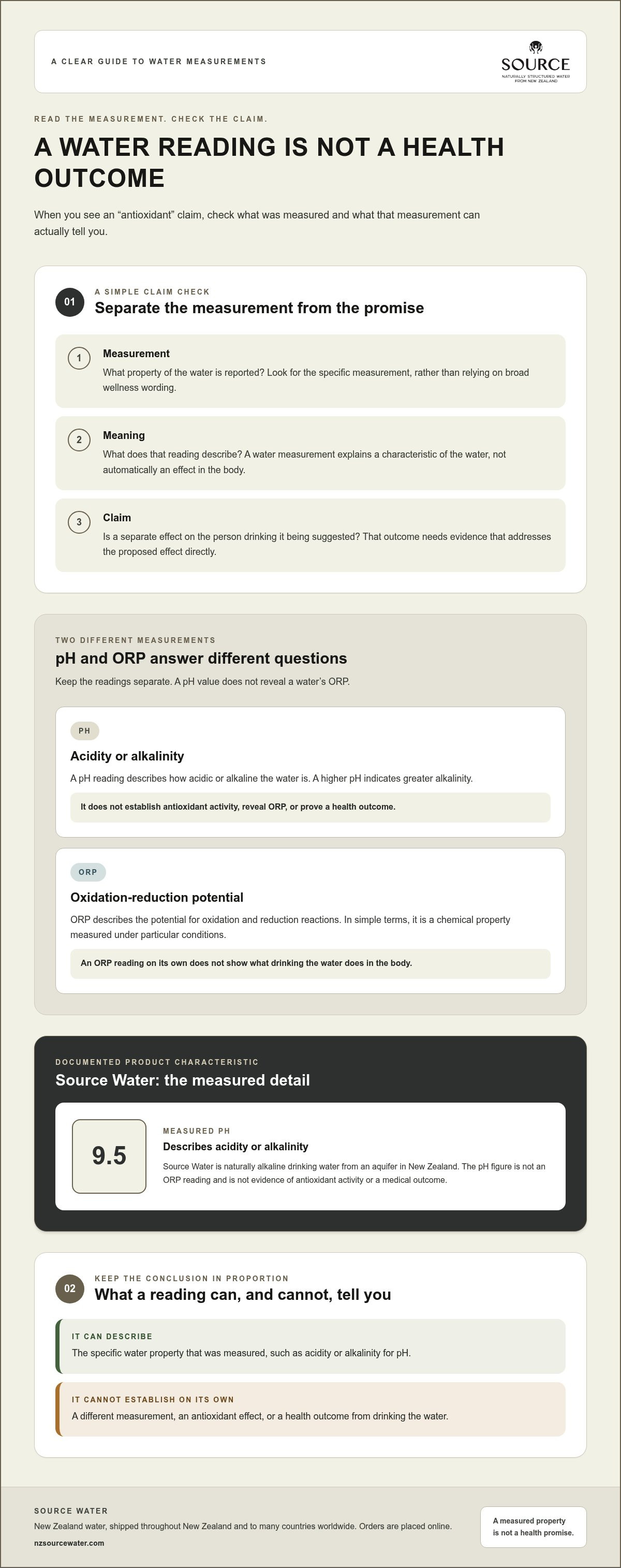
When you encounter claims about antioxidant water benefits, separate the description from the promise. Identify the property measured and what the result represents. Then ask whether the claim stays within that measurement or suggests a separate outcome that needs different evidence.
- Measurement: What property of the water is reported?
- Meaning: What does that reading actually describe?
- Claim: Is a separate effect on the body being suggested?
This distinction lets you consider a water characteristic on its own terms while assessing claims about wellbeing separately. The next section explains how pH and ORP differ.
PH and ORP: Two Different Ways to Describe Water
pH and ORP may both appear in descriptions of water, but they measure different properties. Keeping them separate prevents a familiar reading, such as pH, from being treated as proof of an antioxidant effect.
What does a pH reading tell you?
pH describes how acidic or alkaline a liquid is. It is a characteristic of the water, not a measure of its effect on someone’s health. A higher pH indicates greater alkalinity, but it doesn’t establish a wellness benefit or reveal the water’s ORP.
Source Water is naturally alkaline and has a documented pH of 9.5. That figure describes its acidity or alkalinity. It is not an ORP result or evidence of antioxidant activity or a medical outcome.
What does ORP measure, and what does it not prove?
ORP stands for Oxidation-Reduction Potential. In simple terms, it describes the potential for oxidation and reduction reactions. It is sometimes presented as an indicator of water’s antioxidant or reducing potential, but a reading describes a chemical property under the conditions measured. On its own, it does not show what drinking the water does in the body.
The documented figure for Source Water here is pH 9.5. That is not an ORP reading, and it cannot be used to infer one or establish an antioxidant effect. For wider context on antioxidant claims and health evidence, see the Harvard T.H. Chan School of Public Health’s Antioxidants and Health.
| Measure | What it describes | What it can’t prove on its own |
|---|---|---|
| pH | How acidic or alkaline the water is | Its ORP, antioxidant effect, or health outcome |
| ORP | The water’s oxidation-reduction potential | A health benefit from drinking the water |
When comparing product descriptions, compare like with like. pH answers a question about acidity and alkalinity; ORP relates to oxidation and reduction. Neither number should be stretched into a promise about personal results. Readers interested in naturally alkaline, structured water can explore Source Water from New Zealand as a product with documented characteristics, not as evidence of antioxidant or medical benefits.
Do Antioxidant Water Benefits Have Evidence of Health Effects?
Does a water reading show that drinking the water will produce a health benefit? No. A measurement describes a property of the water; evidence for an effect in the body is a separate matter. That distinction is central when weighing claims about antioxidant water benefits.
No medical outcome should be inferred from pH alone. A pH reading indicates how acidic or alkaline water is. It doesn’t establish antioxidant activity, show what happens after drinking the water, or demonstrate a health effect.
What can a water measurement establish?
A measurement can tell you about the specific property it assesses. Source Water is documented as naturally alkaline, structured drinking water from an aquifer in New Zealand, with a measured pH of 9.5. This is a product characteristic. It does not establish an antioxidant effect or a cellular or medical outcome.
To support a claim about the body, evidence needs to address the proposed effect directly. A water reading cannot fill that gap. When assessing a statement, ask what was measured, what the result means, and whether evidence supports the separate outcome being suggested.
Why should health claims be treated cautiously?
Words such as “antioxidant”, “vitality” or “cellular support” can sound specific while leaving the evidence unclear. They may describe a proposed property or imply a result for the person drinking the water. An appealing phrase, a product description or an individual’s experience does not, on its own, establish cause and effect.
For Source Water, the documented details include its pH and its origin in a New Zealand aquifer. Those details do not establish antioxidant benefits or medical outcomes. Keeping that boundary clear helps you understand what is known about the water without treating a characteristic as a promise about your health.
Use these questions to assess a claim:
- What is being claimed? Is the wording about a measurable water property or an effect in the body?
- What evidence is given? Does it address the claimed outcome, rather than a different property?
- What can you reasonably conclude? Keep the conclusion within the limits of the measurement and evidence presented.
This approach doesn’t require dismissing interest in water characteristics. It keeps description, evidence and expectation in their proper places, so a product detail is not mistaken for a medical promise.
How to Assess Antioxidant Water Claims Carefully
Use a simple sequence: identify the claim, identify the measurement, then ask what that measurement can support. This helps distinguish a stated feature of water from a suggested effect on the body without dismissing a product characteristic that may matter to you.
Which questions help clarify a water claim?
Pause over the wording and ask:
- What property is being described? Is the claim about acidity, alkalinity, structure or another characteristic?
- Is a specific measurement stated? Look for a value and a clear explanation of what it measures. Don’t assume that “antioxidant” wording represents a test result.
- What outcome is being suggested? A description of the water is different from a claim that drinking it changes something in the body.
For example, Source Water has a documented pH of 9.5. That figure describes its alkalinity. It does not establish an ORP result or demonstrate antioxidant activity, so antioxidant water benefits shouldn’t be inferred from pH alone. The same care applies to words such as “structured” or descriptions of aquifer origin: they tell you about the product’s characteristics or provenance, not necessarily about an effect in the body.
How can readers compare product descriptions without overinterpreting them?
Compare the same kinds of information. If one description gives a pH reading and another uses broad antioxidant language without identifying a measurement, the claims aren’t directly comparable. Note what each description actually says, then keep your conclusion within those limits. A measurement can help explain a water characteristic, but it doesn’t automatically validate a separate wellness claim.
If you’d like more context, an article about naturally alkaline water can explain alkalinity, while a structured water guide can explain that product category. Read both with the same distinction in mind: descriptions of water and claims about health outcomes require different kinds of support.
Source Water is naturally alkaline, structured drinking water from an aquifer in New Zealand, with a measured pH of 9.5. These are product characteristics, not a promise of antioxidant or medical benefits. Explore Source Water online to read about the product and decide whether its documented characteristics suit your preferences.
Source Water: A Measured pH and a Thoughtful Next Step
For readers considering naturally alkaline, structured drinking water, begin with what is documented about Source Water and keep that information distinct from antioxidant claims. Source Water comes from an aquifer in New Zealand and has a measured pH of 9.5. These details describe the product’s origin and alkalinity, not a health outcome.
What is documented about Source Water?
The pH reading tells you that the water is alkaline. It is not an ORP value and doesn’t establish antioxidant activity. Knowing the pH tells you one specific feature of the water; it doesn’t answer a different question about how the water may act in the body.
That distinction matters when interpreting phrases such as “antioxidant water benefits”. A measured pH can be stated clearly, but it shouldn’t be used as evidence for cellular effects or medical benefits. The documented characteristics here are naturally structured water, an aquifer in New Zealand, and a pH of 9.5. Claims beyond those facts need evidence that directly supports them.
Where can readers learn about ordering and delivery?
Source Water can be ordered online through the website as a single purchase or a recurring subscription. Orders ship throughout New Zealand and to many countries worldwide, including destinations across Europe, North America, Asia and Africa.
If you’re exploring the category, an alkaline water ordering guide or a structured water buying guide may provide further context about product descriptions and ordering. As you read, compare stated characteristics, note what each measurement describes, and avoid turning a product feature into a promise about health.
Source Water may suit readers looking for naturally alkaline, structured water. Its pH of 9.5 is a documented product characteristic, not an ORP result or proof of antioxidant health effects. You can explore the product online and decide whether its described characteristics match your preferences.
Choose Clarity for Your Next Step
Antioxidant water benefits are best considered carefully: a product description or water reading doesn’t, on its own, establish a health outcome. pH describes acidity or alkalinity, while ORP describes oxidation-reduction potential. Keeping these measurements distinct helps you understand what a claim tells you and where further evidence would be needed.
For Source Water, the documented details are specific: it is naturally alkaline, structured drinking water from an aquifer in New Zealand, with a measured pH of 9.5. That pH is a characteristic of the water, not an ORP result or proof of antioxidant or medical effects.
If these characteristics align with what you’re looking for, explore Source Water and order online. Orders ship throughout New Zealand and to many countries worldwide. Review the product details and decide whether they suit your preferences.
Frequently Asked Questions
What does ORP measure?
ORP means Oxidation-Reduction Potential. It describes a water property related to oxidation and reduction, and is sometimes presented as a measure of antioxidant capacity. That reading does not guarantee an effect from drinking the water. To assess a claim, distinguish the measured property from a separate claim about health outcomes, which shouldn’t be inferred from the term “antioxidant” alone.
Is alkaline water the same as antioxidant water?
No. The terms describe different ideas and shouldn’t be treated as interchangeable. “Alkaline” describes water’s pH, while antioxidant claims relate to oxidation-reduction properties or a suggested effect. Source Water is documented as naturally alkaline, with a measured pH of 9.5. That reading describes alkalinity; it is not an ORP value or evidence of antioxidant activity or a health benefit.
Can a pH reading show whether water has antioxidant benefits?
No. A pH reading describes how acidic or alkaline water is; it doesn’t, by itself, show an ORP result or demonstrate a health outcome. Source Water’s measured pH is 9.5, a product characteristic. It shouldn’t be used as evidence of antioxidant effects, cellular outcomes or medical benefits. Keep what a reading measures separate from what drinking the water is claimed to do.
What is the pH of Source water?
Source Water has a documented measured pH of 9.5. This figure describes the water’s alkalinity. It doesn’t establish antioxidant capacity, cellular effects or medical outcomes, and shouldn’t be extended into those claims. A pH reading is one characteristic of the water, not proof of what drinking it will do.
Does Source water have a stated ORP value?
The documented figure for Source Water here is pH 9.5, not an ORP reading. pH and ORP describe different properties and aren’t interchangeable, so the pH figure can’t be used to infer a negative ORP or antioxidant effect. No health outcome should be attributed to the water based on its pH.
Where does Source water come from?
Source Water is naturally structured, alkaline drinking water from an aquifer in New Zealand. This describes the water’s origin, not a health effect. Its documented pH is 9.5, a characteristic that describes alkalinity rather than antioxidant activity. You can order online, with shipping throughout New Zealand and to many countries worldwide.