

Could tight, dull-looking skin be one of the signs of poor hydration in skin, or is something else at play? It’s understandable to look for clues when your complexion feels different, but fine lines, flaking and sensitivity can have several causes. Skin appearance alone can’t confirm dehydration.
Dry skin and dehydrated skin aren’t the same: dry skin is a skin type associated with less natural oil, while dehydration refers to a lack of water and can affect any skin type. This article explains changes that may accompany dehydration without treating them as a diagnosis.
We’ll look at what tightness, dullness and more noticeable fine lines might mean, how these signs differ from naturally dry skin, and what gentle everyday adjustments may support your skin’s moisture barrier. You’ll also learn when persistent or uncomfortable changes warrant advice from a health professional, so you can respond with care rather than relying on appearance alone.
Key Takeaways
- Possible signs of poor hydration in skin include tightness, rough texture, flaking or a temporarily dull appearance, but none can confirm dehydration on its own.
- The skin’s outer protective barrier helps limit moisture loss. Skin-surface moisture is not the same as overall hydration.
- Use changes in your skin as clues, not a test, when considering whether dryness or dehydration may be involved.
- Notice when changes began, review recent skincare habits and keep up fluid intake suited to your needs before reassessing.
- Seek individual health advice if skin changes persist, worsen or cause pain, or if you feel unwell with broader concerns about dehydration.
Signs of Poor Hydration in Skin: What Changes Might You Notice?
A new feeling or change in your complexion may prompt questions about hydration. Skin can offer useful clues, but the same change may have several explanations. The signs of poor hydration in skin are not a diagnostic checklist, and no single visible feature can establish its cause.
What can dehydrated-looking skin feel or look like?
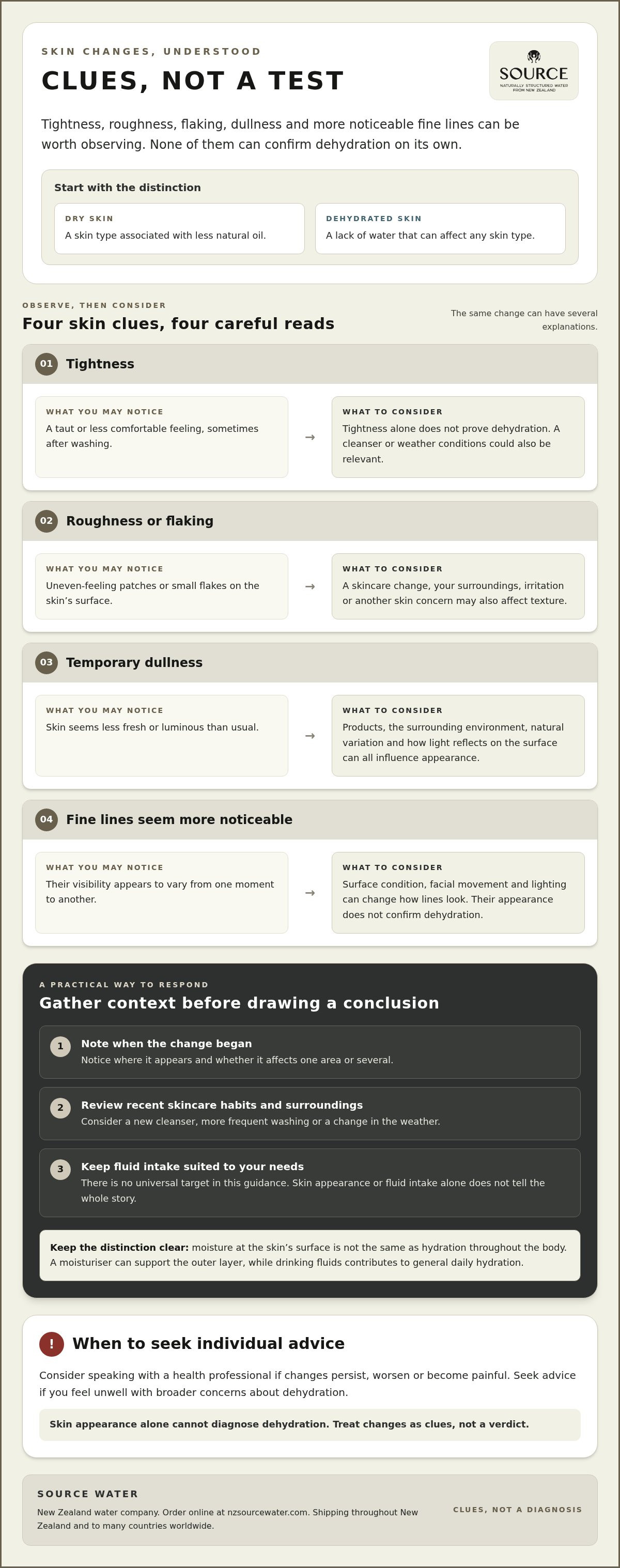
Some people notice skin that feels tight, particularly after washing, or looks temporarily dull. The surface may feel rough or appear flaky. These changes can be subtle and may come and go, so note when they appear and whether they affect one area or several. Tightness alone doesn’t prove dehydration.
Possible clues to observe include:
- Tightness: a taut or less comfortable feeling, sometimes after cleansing.
- Roughness or flaking: patches that feel uneven or show small surface flakes.
- Temporary dullness: skin that seems less fresh or luminous than usual.
- Fine lines appearing more noticeable: their visibility may vary with the skin’s surface condition, expression and lighting.
These are observations, not proof. A rough patch might follow a change in skincare, while tightness could be associated with a cleanser or weather conditions. Irritation and other skin concerns can also affect how skin feels and looks. Consider the whole picture, including changes in your routine or environment, rather than drawing a conclusion from one feature.
Why do fine lines or dullness not prove dehydration?
Skin’s appearance is influenced by more than how much fluid you drink. Products, the surrounding environment, natural variation and other skin factors may affect texture and how light reflects from the surface. Fine lines can also look different depending on facial movement and lighting. A change may be worth noticing, but it is only a possible clue, not a confirmed health finding.
Skin appearance cannot diagnose dehydration. Health professionals assess fluid concerns using a broader picture, rather than relying on complexion alone. One clinical sign they may consider is skin turgor, or how the skin responds when gently lifted and released. The Skin turgor test is not a reliable home verdict for everyone, and visible skin changes shouldn’t replace individual assessment.
A practical approach is to note when the change began, where it appears and whether anything else feels different. This can help you describe the concern clearly if you seek advice. If changes persist, worsen or become painful, consider speaking with a health professional rather than assuming hydration is the cause.
How Hydration and the Skin Barrier Relate
Skin moisture is shaped by more than the amount of water circulating through the body. The outer skin barrier helps limit water escaping from the skin’s surface and helps protect against irritants and everyday environmental contact. It isn’t a visible gauge of overall hydration, but its condition can influence how comfortable and supple the skin feels.
What does the skin barrier do?
The skin barrier is the outermost part of the skin, often compared with a brick wall. Skin cells form the “bricks”, while natural fats between them act like “mortar”, helping hold the surface together. When this layer is working well, it helps reduce water loss and keep irritants out. If it becomes disrupted, skin may feel dry, rough or uncomfortable. These changes can have several causes, so they don’t establish whole-body dehydration by themselves.
Some water naturally moves from deeper skin layers towards the surface and evaporates into the surrounding air. This process is called transepidermal water loss. In simple terms, it describes water passing through the skin and evaporating, rather than sweat leaving the body. A healthy barrier helps keep this loss in balance; if the barrier is impaired, water may escape more readily and the surface can feel drier.
How can everyday conditions affect skin moisture?
Surface moisture can shift with the conditions around you and the way you care for your skin. Cold, windy or low-humidity weather may leave skin feeling less comfortable, while indoor heating can make the air feel dry. Long, hot showers and frequent washing may also remove some natural oils that help support the barrier.
Moisture at the skin’s surface is not the same as hydration throughout the body. A moisturiser can help support the outer layer, while drinking fluids contributes to general daily hydration. Neither a dry-feeling complexion nor a change in fluid intake alone tells the whole story. Consider possible signs of poor hydration in skin alongside skincare habits, surroundings and how you feel overall.
Notice whether a change followed a new cleanser, more frequent bathing or a shift in the weather. Gentle cleansing and avoiding water that feels very hot may be useful everyday choices, though persistent or uncomfortable skin changes may need individual advice. Regular fluid intake should suit your own needs, rather than follow a universal target.
If drinking water is part of your daily routine, Source Water offers naturally alkaline, structured drinking water from a New Zealand aquifer. You can order Source Water online, with shipping throughout New Zealand and to many countries worldwide. It isn’t a treatment for skin concerns, and no particular water type should be assumed to change skin hydration directly.
Dehydrated Skin or Dry Skin: How to Understand the Difference
Dry skin and dehydrated skin are often used interchangeably, but they describe different things. Dry skin commonly refers to a skin type associated with less natural oil, while dehydration describes a possible lack of water in the skin. The distinction can guide what you consider, but it can’t identify the cause of a change on its own.
What is the difference between dry skin and dehydrated skin?
Dryness may be a familiar, recurring feature of someone’s skin. Dehydration can affect people with different skin types and may be influenced by everyday conditions or skincare habits. The two can overlap, and people don’t all experience them in the same way. Think of these descriptions as useful language for noticing patterns, not labels to apply as a diagnosis.
Dry skin, possible clues: a continuing tendency towards roughness, flaking or a less comfortable feel, sometimes linked with lower levels of natural oil.
Dehydrated skin, possible clues: a change from your usual skin feel or appearance, which may include tightness or temporarily more noticeable fine lines.
Both together: skin may feel dry while also seeming less supple. These observations can overlap and don’t confirm either explanation.
This comparison is a starting point, not a test. Someone whose skin is usually comfortable might notice a temporary change after altering their routine, while someone who often experiences dryness may notice changes in different conditions. Even if a moisturiser makes the surface feel more comfortable, that response doesn’t prove what caused the change. Applying a moisturiser and drinking extra water are not diagnostic tests, either.
The phrase signs of poor hydration in skin can sound more certain than the evidence allows. Tightness, flaking or a dull appearance may be clues to consider, but the same features can arise for different reasons. Looking at the pattern over time, recent changes in your routine and how you feel overall gives more context than focusing on one symptom.
What else can make skin look or feel different?
Environmental exposure, such as cold or windy conditions, may affect how comfortable skin feels. Cleansing products and bathing habits can also contribute to surface dryness or irritation for some people. Existing skin conditions may produce changes that resemble dryness, so a list of visible signs can’t establish a specific condition or its cause.
If a change persists, worsens or causes discomfort, consider seeking advice from a health professional. They can assess your individual circumstances and help distinguish between possible explanations. This may be useful if you’re unsure whether a product or routine is aggravating your skin, or if the change concerns you. Gentle observation can help, but it needn’t become an exercise in self-diagnosis.
What to Do When You Notice Possible Skin Hydration Signs
A calm, consistent approach can help you understand a change without turning it into a daily test. Possible signs of poor hydration in skin are only clues, so consider the timing, your recent habits and how your skin feels overall. Make one gentle adjustment at a time, then observe rather than changing several things at once.
How can you monitor changes without overinterpreting them?
Keep a brief note of when you first noticed the change, where it appears and whether anything in your routine or surroundings shifted around the same time. You might record a new cleanser, more frequent washing or a change in the weather. Focus on comfort and whether the concern is settling, staying the same or worsening. Repeatedly pinching or testing the skin won’t explain the cause.
A simple sequence may help you stay measured:
- Notice: describe the change plainly, such as “tight after washing” or “flaky around the cheeks”.
- Review: think about recent skincare, bathing and environmental changes.
- Support: return to gentle, familiar care and keep up ordinary fluid intake suited to you.
- Reassess: pay attention to comfort and persistence, without expecting a fixed result or timeline.
Which everyday habits may support skin comfort?
For day-to-day care, choose a gentle cleanser and avoid washing with very hot water. A suitable moisturiser applied after washing may help support the skin’s surface. If you suspect a new product is irritating your skin, consider pausing it and keeping the rest of your routine simple, rather than adding several new products to chase a quick change.
Drink fluids regularly in a way that fits your needs and usual health guidance. Fluid needs can vary with factors such as activity, climate and health circumstances, so a universal target may not suit everyone. If a health professional has advised you to limit fluids, follow their guidance rather than increasing your intake in response to a skin change.
These steps can support everyday comfort, but they don’t reveal why a symptom began or treat an underlying skin condition. If you choose Source Water as part of your general hydration routine, you can explore Source Water online. It is a drinking-water choice, not a treatment for skin concerns or a promise of a skin outcome.
Give your observations space. If discomfort persists, gets worse or continues to concern you despite simplifying your routine, seek personalised advice from a health professional instead of repeatedly trying new products or relying on extra fluids to solve the problem. If you feel unwell as well as noticing skin changes, get appropriate health advice.
When Skin Changes Need Professional Advice and Your Next Steps
Skin changes can be unsettling, especially when you can’t tell whether they relate to hydration or something else. The signs of poor hydration in skin aren’t enough to identify a cause. If a change persists, worsens, becomes painful or starts interfering with everyday comfort, seek individual advice rather than continuing to experiment with products or fluids.
When should you seek advice about ongoing skin changes?
A health professional can consider your symptoms alongside your skincare routine, environment and broader health, and assess explanations beyond hydration. It may help to bring a brief record of when the change began, what seems to affect it and which products you use. Seek advice if you’re concerned, even if the change seems mild. You don’t need to work out the cause before asking for help.
Pay attention to changes that continue or become more uncomfortable. If the skin is painful, or the concern is affecting sleep or your usual activities, arrange personalised advice. Avoid treating online descriptions or appearance alone as a diagnosis, and don’t keep repeating a routine that seems to make the discomfort worse.
How does drinking water fit into a mindful daily routine?
Drinking water is one part of ordinary daily hydration, not a remedy for skin symptoms. Needs differ between people and can be affected by health circumstances, activity and climate, so follow guidance suited to you. If you feel unwell and are concerned about dehydration, contact an appropriate health professional rather than relying on changes in your skin to judge what’s happening.
Source Water is a drinking-water option, not a treatment for skin symptoms or dehydration. Choosing it should not be linked to an expected change in your complexion. If you’re curious about including Source Water in your everyday routine, you can explore it as a personal preference, separate from any decision to seek health advice.
Keep the next step simple: notice the change, avoid harsh or repeated self-treatment, and seek help if it persists or concerns you. That measured approach leaves room for professional assessment and suitable guidance, without asking your skin to provide answers it can’t reliably give.
Choose a Steady, Thoughtful Next Step
Let your skin be a prompt to pay attention, not a verdict about your health. If you notice the signs of poor hydration in skin, consider what has changed and what support feels appropriate for you. You don’t need to make several changes at once or reach a firm conclusion from appearance alone.
A considered routine leaves space for everyday care and professional guidance when you need it. Keep your choices practical, notice how you feel, and seek individual advice if a concern continues or weighs on you. Wellbeing is not a single visible signal, but a gradual practice of listening and responding with care.
Make Source Water part of your daily routine if it suits you. Order Source Water online, with shipping throughout New Zealand and to many countries worldwide.
Frequently Asked Questions
Can dehydration cause itchy skin?
Itchy skin can have many causes, and itch alone can’t show that dehydration is responsible. Consider whether it began after a new cleanser, laundry product or time in dry or windy conditions, and whether it’s settling or spreading. Skin appearance and sensation aren’t reliable ways to establish fluid status. If itching is persistent, severe, widespread or accompanied by other concerning symptoms, seek advice from a health professional rather than relying on extra water as a guaranteed fix.
Does drinking more water alone fix dehydrated-looking skin?
Not necessarily. Adequate fluid intake supports general wellbeing, but it doesn’t guarantee that a dehydrated-looking complexion will change. For example, tightness after washing may relate to the cleanser or the skin’s surface barrier, not simply how much you’ve had to drink. Keep skin care gentle and avoid abruptly adding several products. Don’t increase fluids beyond advice suited to you. If changes persist or worry you, seek individual guidance.
Can skin look dehydrated even if you drink water regularly?
Yes. Regularly drinking water doesn’t rule out every reason for tight, flaky or uncomfortable skin. The signs of poor hydration in skin can overlap with effects from the skin barrier, weather, indoor air and cleansing habits. Drinking consistently is useful as part of ordinary hydration, but it can’t confirm what’s happening at the skin surface. If a change continues despite a steady routine, ask a qualified health professional for an individual assessment.
Is a skin pinch test a reliable way to tell if you are dehydrated?
No, a home skin-pinch observation shouldn’t be treated as a reliable diagnosis. How skin moves or settles can be influenced by factors besides fluid status, so one result can’t settle the question. Avoid pinching repeatedly to check for change. If you’re concerned about dehydration beyond your skin, particularly if you feel unwell, contact an appropriate health professional for guidance rather than relying on a home test.
Can weather or indoor heating make skin feel dry or tight?
Yes, weather and indoor conditions may affect how skin feels, although the effect varies from person to person. You might notice more tightness after spending time in cold, windy air or in a heated room, but that doesn’t prove whole-body dehydration. Notice whether the sensation coincides with an environmental change, keep cleansing gentle, and seek professional advice if symptoms persist or worsen.
When should I seek medical advice for skin changes that may be linked to dehydration?
Seek individual medical advice if a skin change persists, worsens, causes significant discomfort or appears alongside feeling unwell. These signs don’t establish dehydration, and a health professional can consider skin conditions and other possible explanations as well as fluid status. Before an appointment, note when the change began and any accompanying symptoms. That context can help you explain what you’ve observed without trying to diagnose it yourself.